Tuesday, January 19, 2016

Bottling Cider


With outdoor temperatures below 20F and a raw wind blowing was a good time to bottle cider in the kitchen, by the warm stove. I had two six-gallon pails of pear and apple ciders that began fermenting last September. By December their fermentation locks no longer bubbled: yeast had transformed juice sugars to alcohol and carbon dioxide (the bubbles). As long as air (oxygen) does not contact brewed liquids (by keeping the air lock filled with water), one can keep it for months and bottle it a month before running out of finished ciders. It takes four to six weeks for yeast to carbonate cider in bottles.

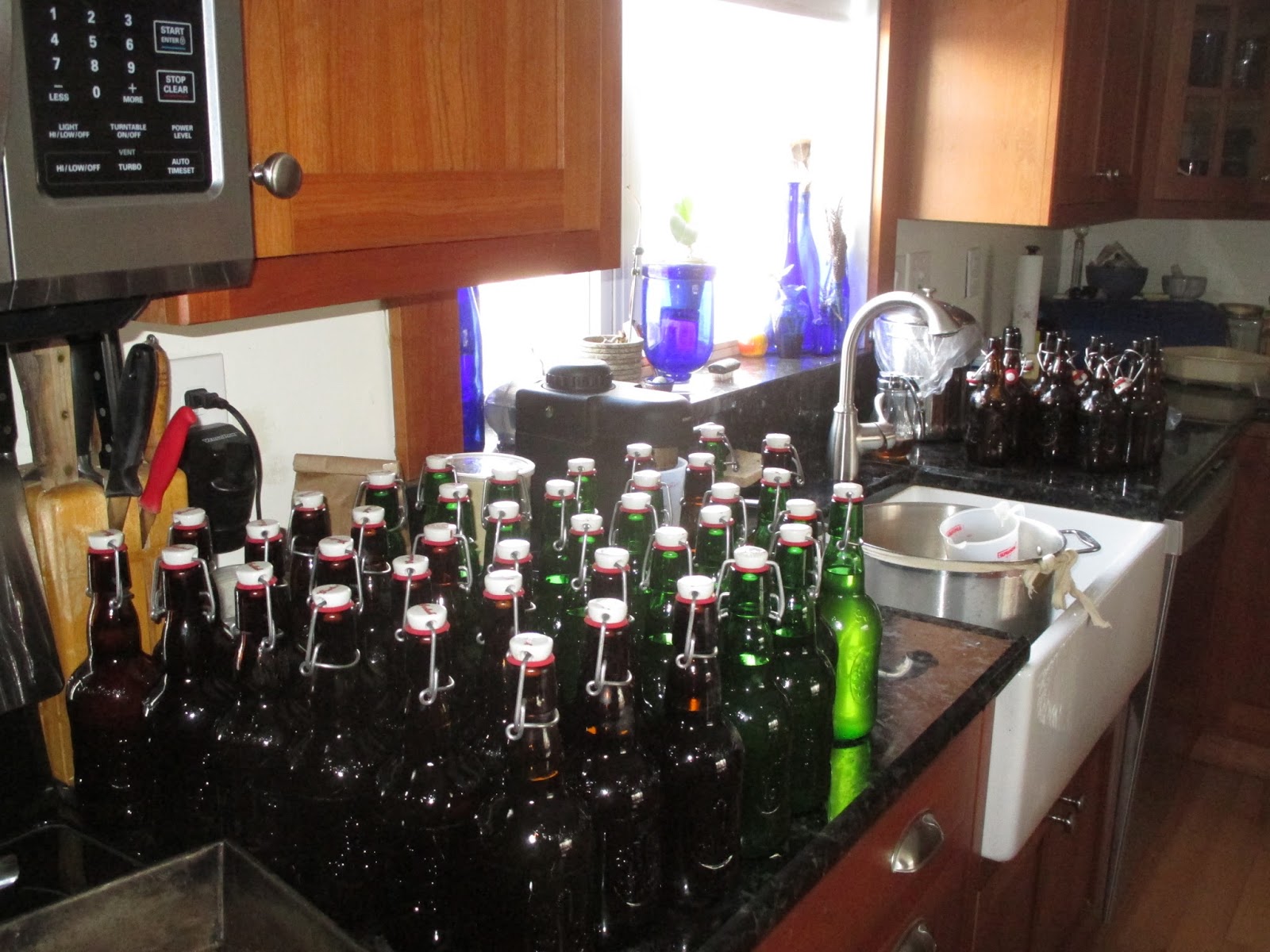
I had accumulated about 10 gallons worth of empty bottles so I began processing the first two cider vessels: 6+ gallons of "hot" apple cider and 6 gallons of pear cider. By not moving the tall pails while carefully removing tops, I was able to ladle off three gallons of clear cider from both without filtering. I added 12 ounces of maple syrup (for the yeast to transform into carbonation) to each three gallon lot and filled 26 sixteen ounce flip-top bottles of each type. I decanted the remaining liquids through cloth filters, reserving the pear cider but filling another 25 bottles with the hot pepper apple cider. 

Last September: I had placed 100 pureed jalapeño peppers, including seeds, in a cloth bag and boiled in cider for 20 minutes. I then added this clear, red tea to the brew to heat up this apple cider. At this point it tastes a bit too hot but time and mellowing while fermenting to create carbonation should make this an exciting beverage.

The second half of the pear cider will go to friends who have a relative who is fond of this beverage.
Empties on the Right, Pot of Brewed Cider Spiked with Maple Syrup in the Sink, Filled Bottles on the Left


Monday, January 18, 2016

Midway Through the Heating Season

It takes weeks for outdoor temperatures to catch the earth's dance around the sun. The hottest time of year is usually not the longest day, first day of summer, and the coldest rarely occurs around December 21, the shortest day. Seasons reflect this phenomenon by getting colder as winter progresses and the sun shines longer every day. Today in mid January we're halfway through a typical heating season - having burned half the wood we'll need to keep warm. It's been an extremely mild winter, so far. This month we even had a thunderstorm with a rainbow and haven't had to shovel the driveway yet, though we did have to sweep a few inches of snow off the deck.
So Far We've Burned Less Than a Quarter of Our Two Year Wood Supply
Rare January Rainbow
Tracks Plastered to Deck Boards Resist Sweeping
The pond finally froze over earlier this month and we had to install the bubbler to aerate the water. This also melts a large hole in the ice. Colder days shrink the size of the hole, warmer days expand it. Our neighbors' fish died last winter from lack of oxygen because heavy snow blocked sunlight from reaching underwater plants. Last week I installed a bubbler in their pond and they are enjoying an otter frolicking around the resulting hole and scooting up on the surrounding ice. 
Our Almost Frozen Pond
Pond Frozen All Across
Hole in Pond Ice by a Bubbler
Recently, a few nights went near zero so we had to bring the carboys of fermenting cider indoors. We also had to move the Granny Smith apples into the greenhouse where we crushed and squeezed most of them into 17 gallons of cider. We still have half a bushel for eating fresh and pies. When it is windy and well below freezing outdoors, sun warms the greenhouse to 50-60 degrees making it pleasant to work in shirtsleeves. Night time temperatures there drop to the low 30's. 
Row of 11 Buckets/Carboys of Fermenting Apple Cider, Pear, Grape and Berry Juices
Our Local Male Pheasant Out for a Stroll


Monday, December 7, 2015

First Pond Ice

It's December 7 and this morning a third of the pond was covered with ice. By noon most had melted. Yesterday we had an otter over two feet long visit us. It stayed only a few hours, scampering around the dock and diving to catch lunch before moving on.
View to the West Showing Ice Cover on Far Side
Pond View to the North, With the West Third Covered With Ice
This autumn has been remarkably mild, with more than 1,000 fresh, unfrozen Granny Smith apples still hanging on trees. We have dehydrated more than 100 pounds and have stored many times that amount in bins. Since we don't need any more apple sauce or dried slices, we'll probably juice them and make hard cider that will last more than a year. That way we can enjoy apples even if next year's crop fails. 
Apples on Trees With Heavy Frosted Grass in Foreground
A remarkable plant started blooming last week: A Winter Rose or Hellebore that is an amazing evergreen perennial with handsome, deep green foliage and pretty flowers that shine through winter and into spring. Our other flowers have frozen and are gone but this one is thriving! We'll have to propagate it and find other colors to help us through cold winters! We'll have to plant them where snow doesn't pile up. This flower will spend most of the winter under the snow that gets piled along the driveway unless we protect it and avoid shoveling on top of it.
Winter Rose
Closeup: Winter Rose

Sunday, December 6, 2015

Milling Logs to Boards: Part 2

It took three tries  but weather finally allowed us to process more logs. The site is very close to the large barn where boards are stored for two or more years to dry. This batch of logs included red oak, mulberry, walnut, cherry and hemlock. Three of the logs were cut into large slabs that were subsequently chainsawed into roughly square pieces that we sealed on both ends to retard drying so the ends dry at the same rate as the rest and don't crack or check.
Roughing Out Wood Bowl Blanks
Bowl Blanks Sealed and Ready for Transport to the Barn for Drying
Since this milling process took place on mowed grass and not in a forest like last time, we spread a very large tarp on the ground under the mill to make it easy to collect and remove sawdust and debris.
Two Red Oak and Three Walnut Logs Lined Up for Milling
The Mill Has Six Jacks for Leveling
Each Jack Incorporates a Row of Holes and a Spring-loaded Pin and Require Only a Single Lever to Adjust All Sequentially
First Log of the Day Being Cleaned of Dirt and Stones to Prevent Damaging the Blade
Delivery of a Very Large Red Oak Log
 The raw lumber is stacked inside a large barn. One inch square "stickers" are placed along the length so that air can circulate through each row to facilitate natural drying. Boards in a row are spaced an inch or two apart so edges dry properly.

Lumber Cut in the Morning, Now Stacked, Will Dry for
Two Years Before Being Auctioned to Support the Club.
View of Some of Last Year's Planks That Will Be Auctioned Next Year
A Tall Stack of Last Years's Boards


Tuesday, November 17, 2015

Saving Food: Apples, Cabbages, Peppers and Beans

It's November 17 and we still have a few dozen bushels of great tasting apples on four Granny Smith trees. 
One of Four Granny Smith Apple Tree Without Leaves But with Hundreds of Apples
We've given away many bushels, dehydrated more and have quite a few bushels waiting for processing. The few heavy frosts we've had haven't touched them. It's hard for me to see them go to waste, though they do help deer and other wildlife thrive. We have a year's supply of applesauce canned and 30 gallons of cider brewing or bottled but have run out of brewing vessels. Every few days I slice and dehydrate 40 or so apples into two gallons of chips. I'll probably pick another ten bushels before they freeze and store them under cover in the garage where I dehydrate them. When it gets way below freezing, they and the dehydrator will need to be transferred to the basement. 
Gallon Bags of Dehydrated Apple Slices and Other Drying Experiments
Three 5-gallon Carboys & Two 6-gallon Pails of Juice Fermenting 
Cabbages did not fair as well as the apples. I had to trim off the top leaves that were damaged by frost. The rest of the heads were still very crisp and hopefully will turn into great sauerkraut (white cabbage) and kimchi (red cabbage). The kimchi also has a few pounds each of garlic and sweet and jalapeño peppers mixed in for flavor. We have a total of seven gallons of these raw veggies slowing fermenting in the garage to extend their time to maturity while we eat more than a dozen fresh cabbage heads and pounds of peppers.
A Few Red Cabbages with Top Leaves Trimmed Off
Cross Section of A Red Cabbage
Five and Three Gallon Crocks Filled with Fermenting Cabbage and Other Veggies. Tops Are Weighing Down Plates That Keep Veggies Submerged in Brine.

Beans are easier to preserve than fruits and vegetables that have to be cut, shredded or squeezed. They simply have to be shelled and spread out to dry. Peppers, too, can be hung out to dry, and look good in one corner of the kitchen. Need a little heat in a dish? Pull one off and crumble it into the pot!

Scarlet Runner Beans in Various States of Drying
A Ristra of Alice's Favorite Hot Pepper (from a fellow seed saver) Hanging Out to Dry


Thursday, November 5, 2015

Glazing Details & Finally Planting Garlic

Weather this week has been sunny and warm, perfect for finishing up the greenhouse glazing details. Both the seven panels that make the transition from the building roof to glazing panels and the covering for the remaining five panels peak had to be reinstalled. 
Aluminum-Skinned Foam Panels Make the Transition from the Corrugated Building Roof to the Glazing Panels
EPDM Rubber Sheet Peak Detail
The new glazing panels are three inches longer than the old ones so they create a "drip edge" that will allow gutters to collect rain. Water has been running down the front wall because there was no extension to let water fall free. Next spring I'll install a system to collect rain and store it for watering both the greenhouse and outdoor gardens so we no longer have to pump water up from the pond. Ice and snow from both the connected building and the glazing slides down with lots of force and would damage gutters which would also impede snow removal, required periodically to make way for more snow.

To prevent rain from entering the internal passages of the glazing, I had to fabricate aluminum flashing that sheds water and allows any moisture inside the panel to drain. These flashing details had to be inserted just under the top layer of the panels so that they readily shed ice and snow but don't get knocked off by heavy frozen sheets when they slide down. Finally, everything had to be caulked to keep out winter winds.
Drip-Edge Detail That Covers the End of the Glazing Panels, Readily Sheds Ice and Snow yet Allows Moisture that Collects Inside the Panels to Drain and Will Let a Gutter Collect Rain 
I like to plant garlic during October so that it develops healthy plants before the ground freezes solid but this year finishing the greenhouse was more important. The first 300 cloves did make it into the ground today and the rest will probably follow within a week. An early thaw will let them flourish next season but we'll have to get by with a smaller harvest if we get an extended cold spring like this year.
Garlic Bulbs Ready to Be Broken Into Individual Cloves for Planting
First Wide Row of Garlic Cloves Planted, Root End Down
Garlic Bed Covered with Two Inches of Soil, Then Two Inches of Mulch
Second Garlic Row and It's Getting Dark Already!
Both Rows Ready for Winter!
Closeup of This Year's Garlic Bed Now Covered in Parsley That Was Planted in June Five Weeks Before Harvesting the Garlic. The Seeds Need Be Sprinkled Around the Thinning Mulch That is Being Eaten by Earthworms and Pill Bugs. This Parsley Is the Main Ingredient, Along with Garlic, of Our Favorite Pesto!

Sunday, November 1, 2015

Final Pepper Harvest and Autumn Scenes

We had a late killing frost at night on October 18, a welcome month later than some years. As it was getting cold that afternoon I harvested the sweet and hot peppers, the only frost sensitive crops not yet put away. The sweet peppers filled four bushel baskets together weighing around 125 pounds. I ran out of time to pick individual fruit, so, with light from a headlamp, I cut whole hot pepper plants and placed more than 100 of them in four piles in the insulated back building and shut the door. We had only two plants worth of shishito peppers so they just went into my pocket. It took many hours over the next days to separate the 150 pounds of hot varieties from their stalks and leaves. Around half of both the sweet and hot peppers were fully ripe, with the rest green to partially colored.


A Box of Sweet Peppers Heading to a Friend
From Top: Serrano, Alice's Favorite, Jalapeño, and Poblano Hot Peppers Left After Delivering 140 Pounds to a Food Pantry and Friends
 Frost also did in the dahlias and gladiolus and a week later we dug up the tubers/corms and put them in a dry place to prepare them for a long winters nap.
Light Colored Dahlias with Amaranth Leaning from the Left 
A Dahlia Arrangement
Solid Red Dahlias with Cosmos in the Foreground
Glad Corms in the Wheelbarrow, Dahlia Tubers in the Box
Frost also hastened color change of maple trees and it took only a few days of wind and rain to send most of the leaves to the ground.
Maple Leaves Just Starting to Fall
Four Days Later: Maple Leaves Falling Faster
A Week Later: Few Maple Leaves Left on Tree