Sunday, August 7, 2016

Hiking Food: No-Bake Vegetable Crackers

I plan a long hike with one of my daughters this fall. Rather than bring commercial processed food I hope to primarily eat food we collected or grew locally. Last month I made ten sheets of fruit leather using our raspberries, gooseberries and apple sauce. Next steps: energy bars and crackers.
Raspberry, Gooseberry and Applesauce Fruit Leather
I found a recipe that added together a variety of raw minced herbs and vegetables that are spread on sheets and dehydrated. Rather than follow the suggested ingredients, using a food processor I pureed 14 cups of summer squash, two cups of garlic, two onions, four cups of boiled chestnuts and a cup of fresh basil/oregano leaves. I then added a cup of olive oil and three cups of flaxseed ground with an ounce of dehydrated hot peppers into a crumbly paste using a Corona flour mill. After thoroughly blending all these ingredients together, using an icing spatula, I spread this paste in 3/16 inch thick layers on nine 14 inch square non-stick sheets on wire rack shelves in our dehydrator.

Raw Ingredients for Vegetable Crackers: Summer Squash, Garlic Cloves, Onions and Boiled Chestnuts (from Freezer)
Onions and Garlic in the Food Processor, Pureed Squash in the Bowl, Ground Flax Seeds and Dried Pepper in the Square Container
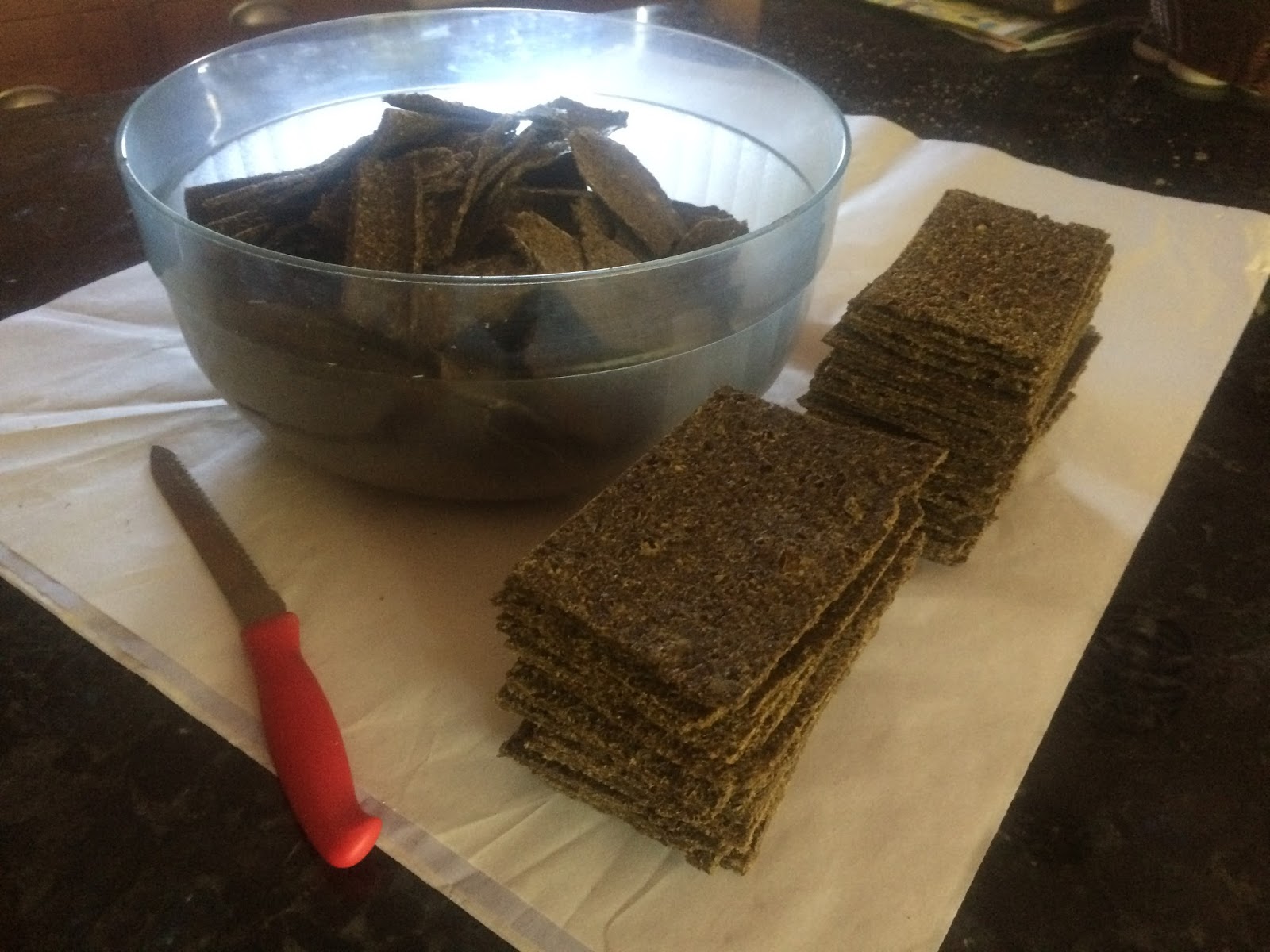
After 12 hours at 125F, the still sticky bottom of these sheets of vegetable paste peeled easily away from the teflon-coated fabric. With dry sides now resting on the wire racks, these sheets dried another 8 hours.  The result: three pounds of firm sheets that were easily subdivided using a serrated knife. I trimmed off the edges that curled up and make them into chips. The central portions became flat 3" x 4.5" crackers.
Sheets of "Vegetable Leather" That Will Become Chips and Crackers
Bowl of Vegetable Chips and Stacks of Crackeers
These crackers taste pretty good, though sprinkling salt makes them taste even better. What's next? Try versions with tomato paste, kale and a much higher ratio of boiled chestnuts. One goal: a great no-bake pizza cracker! Maybe by adding cheese and pepperoni to the above?

Friday, August 5, 2016

Flowers: 2016

Although I prefer to tend vegetables, I do supply my wife with hundreds of flowers in pots that she plants in her raised beds and borders. She saves some seeds from the showiest varieties but orders quite a few packets of new ones every year. Along with our vegetable seeds, I start her flowers in flats and then transplant single plants in their own pots, most often yoghurt cups. When the threat of frost is over, I often prepare her soil and distribute mulch while she plants. She chooses where each variety goes and avoids planting annuals where they grew the year before.
Russian Iris
Yellow Iris, Blue Spiderwort and Red Peony, with White Peony in Background
Hollyhocks
Black-eyed Susan, Rudbeckia fulgida, with Smooth Leaves
Black-eyed Susan, Rudbeckia hirta, with Hairy Leaves
Pink Phlox, Red Zinnias and Orange Day Lilies with Yellow Black-Eyed Susan in the Background
Because so many of our flowers are perennials or sprout in the beds and paths from seed all by themselves, managing beds is much more haphazard than planting vegetables. Many of our base flowers have been growing in the same places for decades: phlox, peonies, lavender, bleeding heart, lilies, tulips, bee balm, butterfly weed, lilies of the valley, spiderwort and hostas. Some of these like to expand their territory and have to be kept in check. Others readily volunteer and often have to be moved, given away or discarded: violets, lupine, marigold, black-eyed Susan, forget-me-nots and hollyhocks. Over the years, colors sometimes fade  and we start over. 
Wild Blue Lupine: Food for Karner Blue Butterfly
Bleeding Heart
Foxglove
Cultivated Lupine Comes in Many, Many Color Combinations
Marigold
Yellow and Red Snapdragons on Left, Black-Eyed Susan on Right
Purple Statice for Dried Flower Arrangements
Day Lilies
Evening Primrose
Indoor Flower Arrangement: Destination for Many Blooms
Very Dark Red Sunflowers

Sunday, July 31, 2016

Rainy Day: Perfect for Bottling Cider

We welcomed rain today: the first real rain we've received all summer. Today is the first day in the four months I've been logging rainfall that the gage recorded more than an inch! When that happens, the central tube fills to the top and lets the overflow bleed into the surrounding volume. Tomorrow morning I'll have to add this extra rain to 1.00 inches to obtain the total. 
Siphoning Dark Hoppy Cider Into a Bucket So Maple Syrup Can be Added Without Disturbing the Layer of Yeast on the Bottom of the Carboy
Decanting Clear Apple Cider That Has Fermented 10 Months
When it's pouring is a perfect time to bottle cider. I chose to siphon both a carboy of hard hoppy apple cider, that also had some brown sugar added to make it around 9% alcohol, and one of pure apple juice, now 6% still cider. I added 11 ounces of maple syrup to each four gallon batch to carbonate these drinks in their bottles. It will take a month or so for the yeast to convert the sugar in the syrup into the carbon dioxide that makes the bubbles.
Illustrating the Color of the Pure Apple Cider 
Basement Shelf Holds 35 Bottles of the Hoppy Cider (Left) and 37 Bottles of Plain Cider

Tuesday, July 26, 2016

Guinea Fowl Tragedy

Early this morning a neighbor pulled into our driveway, walked back along the road, and came back holding a Guinea fowl that was very still. He had hit it with his truck, while trying to avoid it. It was the father of some of our 18 keets and the other four of his flock wandered around all day calling for him.
Our Guinea Fowl Died in an Accident with a Truck
The flock often doesn't settle on their roosts until well after dark but tonight they were all inside the chicken tractor two hours before dusk, behavior that never happened before! We don't let food go to waste and roasted this bird with potatoes. He was a bit tough, for he was full grown when we got him a year and a half ago. This is the first time we've eaten Guinea fowl and were surprised that all his meat was dark, with lots of sinew. But I like chewing on bones and enjoyed every bite, thanking our very friendly fowl for his time with us.

Guinea Fowl Ready for Roasting
His decedents are doing well, growing like weeds. I spend time with each of the 18 two times every day so they get used to being handled and are not afraid when I call or speak to them. I hold each until they no longer struggle or peep. They are slowly getting much calmer.
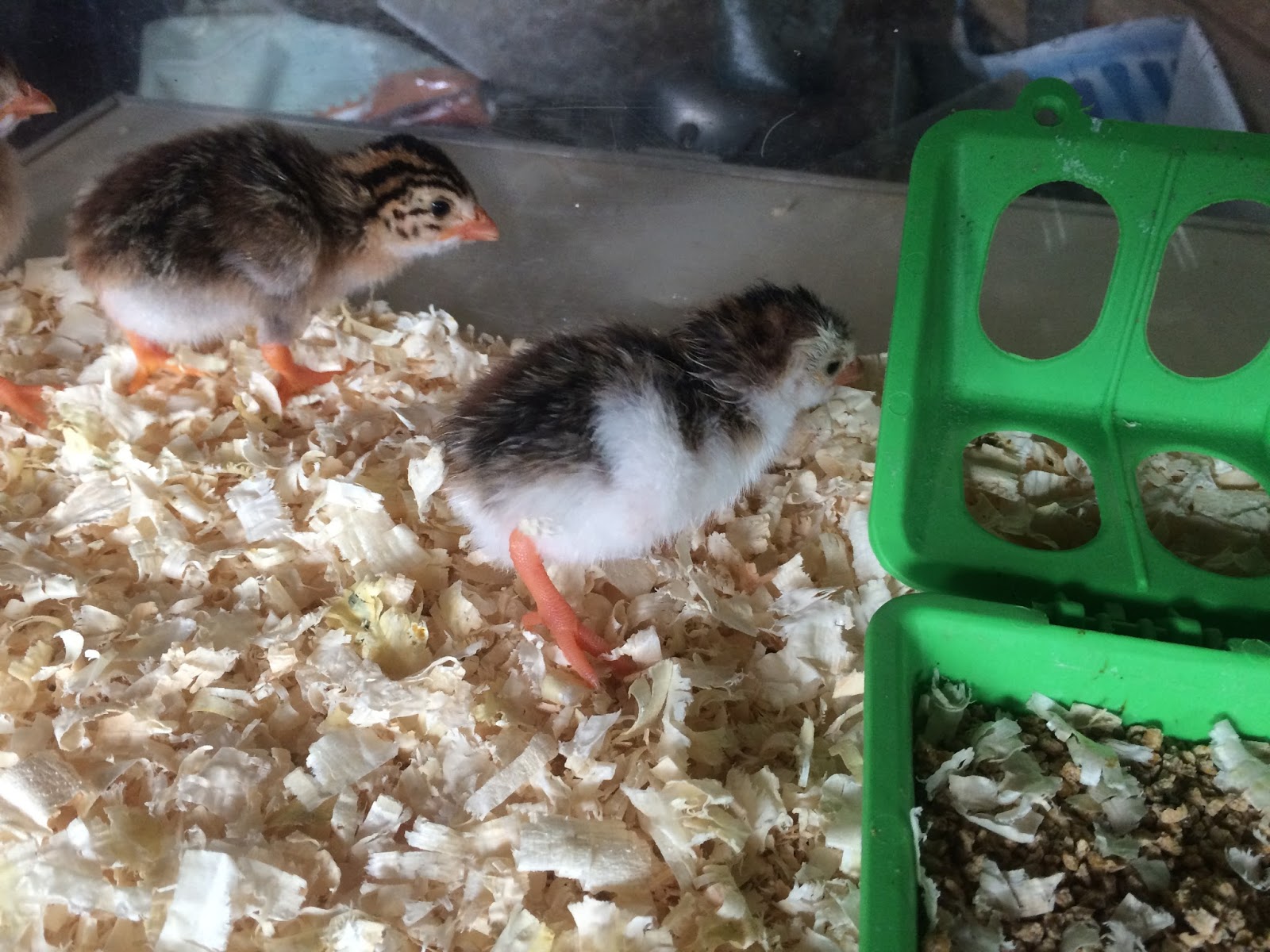
Our Keets, Now 10 Days Old, Though "Pipsqueek"in Front Is a Bit Less Than a Week Old

Monday, July 18, 2016

Letting Everyone Know How Much Rain and Snow Falls:

I've been monitoring rainfall during growing seasons since I began gardening so I know when less than an inch of rain falls in a week - indicating that it may be time to water sensitive plants. Neighbors know that I do this and often ask me rain amounts and I'm happy to share the data. This spring I attended a National Weather Service seminar on reporting significant weather events and they urged attendees to join CoCoRaHS  (pronounced KO-ko-rozz) , an acronym for the Community Collaborative Rain, Hail and Snow Network. I joined right away!
Rain Gage That Fills Up a Central Tube That Overflows Into the Surrounding Cylinder. This Enables Rainfall to Be Accurately Measured to 0.01 of an Inch. Overflow Is Simply Emptied Into the Center Tube (After Emptying It) and the Amounts Added Together.

The Gage Itself Is Unobtrusive, Can be mounted on a Fence or a Post Away From Buildings, Trees or Obstructions That May Affect Results.

What's required? Purchase an accurate rain gage ($30) and report what it collects every day at a specific time (me: 7AM) or, if you are away from home, when you return. It takes me less than a minute each morning to send the data: a single click to submit the pre-filled "zero" submission or typing in the few digits of actual precipitation of rain. This information is immediately available through the website:  

http://www.cocorahs.org/ 

I no longer write rainfall depths on the calendar because it's easier to poll the data from this website. If you want to know how much it rains here, just poll Station Number: NY-RN-13 and the dates of interest.
My Data From "View Data" Tab on http://www.cocorahs.org/ 
Consider joining this network for its largest value is its ability to warn of potential flooding. This community developed in response to devastating flooding in Colorado when no warning was broadcast and people died. Participants in the program are urged to rapidly submit periodic rainfall data during heavy rains so that the weather service can utilize the information. Doppler radar gives estimates, not rain that actually hits the ground. My neighbors still ask about rainfall numbers but are now also aware of this online resource. 

Sunday, July 17, 2016

Sustainable Poultry Odyssey

In the past we had ordered a variety of chicks, two dozen at a time, that arrived by post. Even though they matured into both roosters and hens, no mom ever became "broody" and incubated her eggs. Five years ago we again tried to develop a flock of sustainable poultry. At a tailgate sale we obtained two dozen white leghorn peeps, two Buff Orpington roosters and three matching hens. Although these fowl produced a phenomenal number of eggs the following years, none succeeded in producing offspring. One by one they succumbed to various maladies until we had only a single rooster. 

Spring, a year ago, we tried a different approach: a pair of young Guinea Fowl and a dozen "fertile" chicken eggs. The eggs never hatched and a year later we still had two vociferous fowl and the last of the earlier flock: a large Orpington rooster. Throughout an entire year we never found a Guinea fowl egg so our pair turned out to be both male. This spring we procured three Guinea hens to attract their attention. Within a few weeks we started finding eggs in the nesting boxes located in the chicken tractor. Eventually they decided laying eggs only in the upper left box. After it contained about 30 eggs, one of the Guinea hens began sitting on them. 
Our Buff Orpington Rooster and Two Male Guinea Fowl: Spot and
Dot
Closeup of Dot
The Dozen "Fertile" Eggs That Never Hatched: The Labels Help Orienting Them When Turning Then Every Day
The other two Guinea fowl, now blocked from laying eggs in the common nest by the broody fowl, found a secret place in some brush to lay their eggs. When clearing a patch of brush we came across the nest and collected the eggs because we didn't want the local fox to eat them or one of our fowl. We watched in horror a fox stalking our flock and successfully grabbing one by the tail. Guinea fowl are very strong fliers and it got away, leaving only a trail of many dozen feathers!
Part of the Trail of Feathers Left by the Fox
The First Hidden Guinea Fowl Nest
A week later we discovered a second nest with eggs and have been periodically snitching some of the eggs so that they never total more than ten. So far, they only visit the nest to lay eggs and show no tendency to brood. 
The Second Hidden Guinea Fowl Nest That We Rob Every Few Days
Our Egg Basket With Eggs From the Nest Above
The incubation period for chickens is around 21 days and we were disappointed that no keets (a baby Guinea fowl) appeared under the brooding Guinea fowl in 24 days, then 28, then 30. But on day 32 I saw a tiny keet on its mom's back. We couldn't imagine a keet surviving a five foot drop from her nesting box, nor would it be safe for them to live on the ground in the chicken tractor along with now eight full size birds. An internet search revealed that Guinea fowl moms are not especially good at taking care of their young and most recommended raising keets by hand. 
Our First Two Keets on the Pile of Eggs Their Mom Had been Sitting on For More Than 30 Days
Basket of Keets on Their Way to the Nursery
Picking Keets One-by-one so Each Can Have Its Bill Dipped Into the Water Trough to Insure It Knows Where to Get a Drink
Keets Huddled Under the Heat Lamp
Keets Basking in Early Morning Sun That They Like Better Than the Heat Lamp
We set up a nursery with game bird kibble, water and a heat lamp and secreted 13 keets away from their mom. She still had 30 eggs under her when she decided she had no future sitting on them and she left them ever longer periods. I fired up our incubator and transferred half the remaining eggs to it. The first night one hatched with four the next day. We now have 17 keets requiring attention at least  four times a day - for the next six weeks!
The Second Transfer of Keets from Under Their Mom Including the Only Grey Colored One
Incubator With Two Hatched Eggs
A Keet With Feathers Still Wet From Being Inside An Egg
The Last Keet to Hatch in the Incubator Has White Wings and Breast!
Rooster and One Fowl Inside the Chicken Tractor, One Outside

Our Red Hen and Spitzhaben Rooster With Two Guinea Fowl

Four Guinea Fowl Roaming a Field, Looking for Ticks and Other Things to Eat