Showing posts with label Processing Tomatoes. Show all posts

Sunday, September 10, 2017

Processing Tomatoes

Summer has been cool so tomatoes are ripening later than usual. We plant about 100 tomato plants so that we can process what we need in large batches. We share early and later harvests when there are fewer. This year we were running low on soup stock, tomato sauce and ketchup so tackled replenishing these.
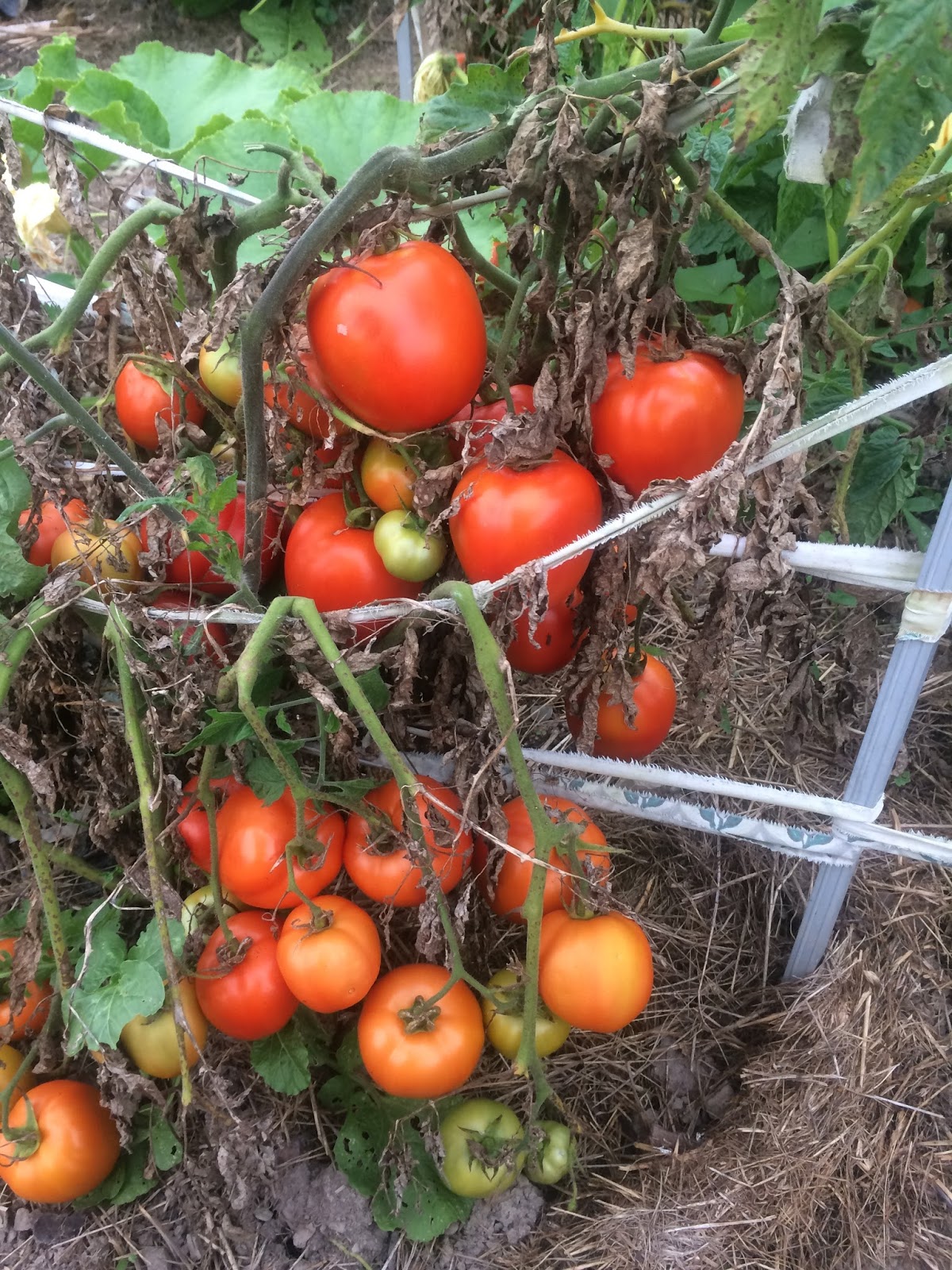
Floradade Tomatoes Ripening Nicely But Leaves Drying Up
Super Roma Tomatoes Producing Well But Leaves Also Withering
Sauce Tomatoes: 2017
We use a Squeezo food processor to separate tomato pulp from seeds and skin. It takes a whole day each to pick a few bushels of tomatoes, manually grind them through the Squeezo, decant and preserve the "tomato plasma", add spices to the sauce and ketchup and can them, clean the equipment and feed what we don't use to the Guinea fowl. This year's totals: 22 quarts of tomato sauce, 31 pints of ketchup and 65 quarts of soup stock. 

Squeezo Processor With Sliced Tomatoes Placed in Funnel, Juice and Pulp Slide Down the Chute and Seeds/skin Comes Out the End

Squeezo Closeup From a Different Angle

Bowl Full of Tomato Skins and Seeds But With Some Pulp

Second Squeezing of Above, Now Much Drier and a Third the Volume
It takes only half an hour to cook these because we separate the plasma from the pulp using a colander which we try to float in the sauce. To keep it from sinking, we bail out the clear liquid that leaks through the holes in the colander. This process does steal some of the garlic, onion and basil flavors from the sauce  but delivers them in the soup stock. We make the ketchup after separating the plasma so that soup stock is pure tomato juice.
The Colander We Found That Works Best for Bailing Soup Stock from Sauce
We use a canning technique that uses a small amount of water in a pan covered by a jar support plate with holes. When the water boils, steam envelopes the jars and exits through two small holes in the lid. We steam these acidic products for 15 minutes once steam exits the lid. 
Canning Technique Where Water Boils under the Plate that Holds the Jars and the Cover Traps Steam to Envelop the Jars.

Difference: Ladled the Left Quart While Tomato Sauce Was Boiling. Right Ladled Out of the Colander With No Boiling (Steam Bubbles Pumps Some Pulp Through the Colander Holes)  

First Batch (18 Quart Pot) of Soup Stock and Tomato Paste (5:3 Ratio)

First Batch of Soup Stock and Ketchup (12 Quarts: 12 Pints or 2:1 Because Vinegar Is Added to Make Ketchup)


Wednesday, September 2, 2015

Processing Tomatoes

We grow almost 200 tomato plants in two separate gardens. This year we are trying six varieties and not saving tomato seeds so each section has more than one variety. When we save seeds, we grow only a few types and isolate each variety to keep the seed pure and less likely crossing with another. This time of year this many plants deliver a few bushels of ripe fruit each week that we share with family, friends and neighbors. We also deliver 40 to 100 pounds each week to a local shelter.
The "Squeezo" Separates Tomato Skins and Seeds from Pulp and Juice. We Put the Skins and Seeds Through Twice to Maximize Yield and Dry the Dregs for the Chickens.
Hand Cranked Food Processor with Interested Dog, Cupcake.
This week was our turn to process ripe tomatoes. We separate the juice and pulp from the seeds and skin using the same "Squeezo" food processor that we use for apples. We add lots of garlic, basil, oregano, and hot peppers (Serrano this time) and let boil for half an hour. 
Tomatillos, Serrano and Sweet Peppers We Added to Flavor the Tomatoes
On top of the bubbling puree we then float a metal colander with small holes so we can ladle out most of the clear liquid. We preserve this in quart jars for soup stock that we use to reconstitute dry beans during cold months. It takes three or four quarts to make a large pot of soup using a pound each of dry beans and frozen sweet corn. We usually add hot turkey sausage and any fresh vegetables available. The wood stove in the kitchen is hot or warm from October to April since it heats our home so it's no trouble to slowly cook soup for eight hours, or so, every week. 
Metal Colander Floating on Top of Cooking Tomato Sauce That Facilitates Ladling Out Tomato Plasma to Thicken It.
Tomatoes processed this way make twice as much soup stock (flavored tomato plasma) as it does thick sauce that we use for pasta or pizza.

Day One: Nine Quarts of Thick Tomato Sauce and 19 Quarts of Soup Stock, That Have Various Amounts of Tomato/Flavoring Solids. Fewer Bits and Pieces Go Through the Holes in the Colander As the Sauce Thickens. 
Day Two: Five Quarts and One Pint of Tomato Sauce, 11 Quarts of Soup Stock On Top of the Stove We'll Use for Cooking All Winter.