Showing posts with label Guinea Fowl. Show all posts

Monday, December 31, 2018

2018: An Interesting Year

This post rambles through topics that don't warrant dedicated blog entries. Many subjects like sprouting seed, growing them to transplant size in the greenhouse, then planting in outdoor gardens have been covered earlier and methods haven't evolved much. Tomatoes this year were outstanding, though the rows proved too close together (36 inches) and hard to get through later in the season. Next year we'll try four foot spacing between rows.
Clacker Toys for Toddlers
The Showcase Entry Clacker Toy
I often spend time in winter working on wood projects to get ready for the spring Northeast Woodworkers Showcase where our organization displays articles made during the year. I entered one of four "clacker" toys that make a lot of noise when rolled across the floor. It only won second place in the toy category because someone created a perfect scale model of a bulldozer in which everything worked! Each of the hundreds of treads actually move when pushed along, an incredible amount of beautiful craftsmanship. 


Bulldozer that Won a Blue Ribbon
 Every winter two nieces and their parents visit us on their way back from a week skiing. They usually want to work on a project and this time chose to help make two animal figures: a cheetah and a French Bulldog. These are mounted on pedestals with springs hidden inside so strings attached enable each to wag a tail, bow, lie down or assume other motions. I sent them home unpainted, hoping their owners would make them look like the animals they chose.
Cheetah and French Bulldog Toy Action Figures
 Every spring we shave most of the hair off our dog to make her more comfortable (she withers in heat). She loves looking like a lion, or at least, being much cooler (and rolling in cool grass).
Belle in Her Lion Cut
Fully Developed Monarch Caterpillar
Newly Emerged Monarch Butterfly
 We love butterflies and I've been collecting and identifying them my whole life. Monarchs are our favorites because they are large, beautiful and migrate such long distances. Last year I saw only three. This year was different: we saw many all summer, including their caterpillars on milkweed. After monitoring many caterpillars that did not survive to make chrysalises, we collected new ones and placed them in a large jar with sprigs of milkweed. We successfully raised nine through their becoming butterflies! And we let them go: hopefully to fly to Mexico where they overwinter. 
Some of Many Millions of Monarch Butterflies Overwintering in Mexico, 2018-19
Our daughter, Zoe, is in Mexico as I write this, and just sent me the photo above. She went there specifically to see these butterflies and was encouraged that guides at the site noted that there are more this year than many prior years. Ever more folk are conserving patches of milkweed that promote these butterflies in their migration north.
Zoe with Her Catfish
We have a farm pond that we stocked with fish many years ago. The species that flourish are crappie, bass and channel catfish, though sunfish and bullheads also thrive. Our daughter, Zoe, wanted to catch one of the large catfish for a long time and finally she caught one, and we ate it. The downside was that this lady was full of roe, even though it was September. We had no idea fish could be laden with eggs at this time of year. As with all of the animal parts we don't serve as dinner, we pressure cook them and grind them into paste for our animals so none goes to waste.

 Our Guinea fowl have always been problematic: they like to lay their eggs in hidden thickets around the property instead of in the egg boxes we carefully prepare for chickens. This year we had three females establish nests in remote hedges and luckily we found each one. Two of the three fowl did not survive incubating their nest overnight, one disappeared leaving only feathers and the other we found lifeless but in perfect condition a few hundred feet from her nest but her eggs had been eaten. The male and those females that were not laying eggs roosted in their protected enclosure indoors every night that had safe nesting boxes but these ladies refused to use them. We did routinely snitch eggs from their nests, hoping that they would not start incubating their eggs until they had around 30 (a persistent rumor). Eventually each started sitting overnight even though they had fewer than 20 eggs. We placed some of their eggs under two broody hens (chickens) and five hatched, with four now almost grown up (thinking they are chickens).
One of the Guinea Fowl Nests
A Second Guinea Fowl Nest
Shiitake Mushroom Harvest
Some of the Chestnuts We harvested
One Batch of Onions Packed for the Shelter We Supply
One Picking of Ripening Peppers
Except for our Brussel sprouts, our gardens produces plenty of food for us, friends and the shelter we supply. We planted many types of squash and they did very well, hundreds of pounds more than in other years.
Some of the Winter Squash Maturing 
Another View of Winter Squash Drying on Tables So that Rodents Don't Nibble Them Before They Get Distributed


Tuesday, July 26, 2016

Guinea Fowl Tragedy

Early this morning a neighbor pulled into our driveway, walked back along the road, and came back holding a Guinea fowl that was very still. He had hit it with his truck, while trying to avoid it. It was the father of some of our 18 keets and the other four of his flock wandered around all day calling for him.
Our Guinea Fowl Died in an Accident with a Truck
The flock often doesn't settle on their roosts until well after dark but tonight they were all inside the chicken tractor two hours before dusk, behavior that never happened before! We don't let food go to waste and roasted this bird with potatoes. He was a bit tough, for he was full grown when we got him a year and a half ago. This is the first time we've eaten Guinea fowl and were surprised that all his meat was dark, with lots of sinew. But I like chewing on bones and enjoyed every bite, thanking our very friendly fowl for his time with us.

Guinea Fowl Ready for Roasting
His decedents are doing well, growing like weeds. I spend time with each of the 18 two times every day so they get used to being handled and are not afraid when I call or speak to them. I hold each until they no longer struggle or peep. They are slowly getting much calmer.
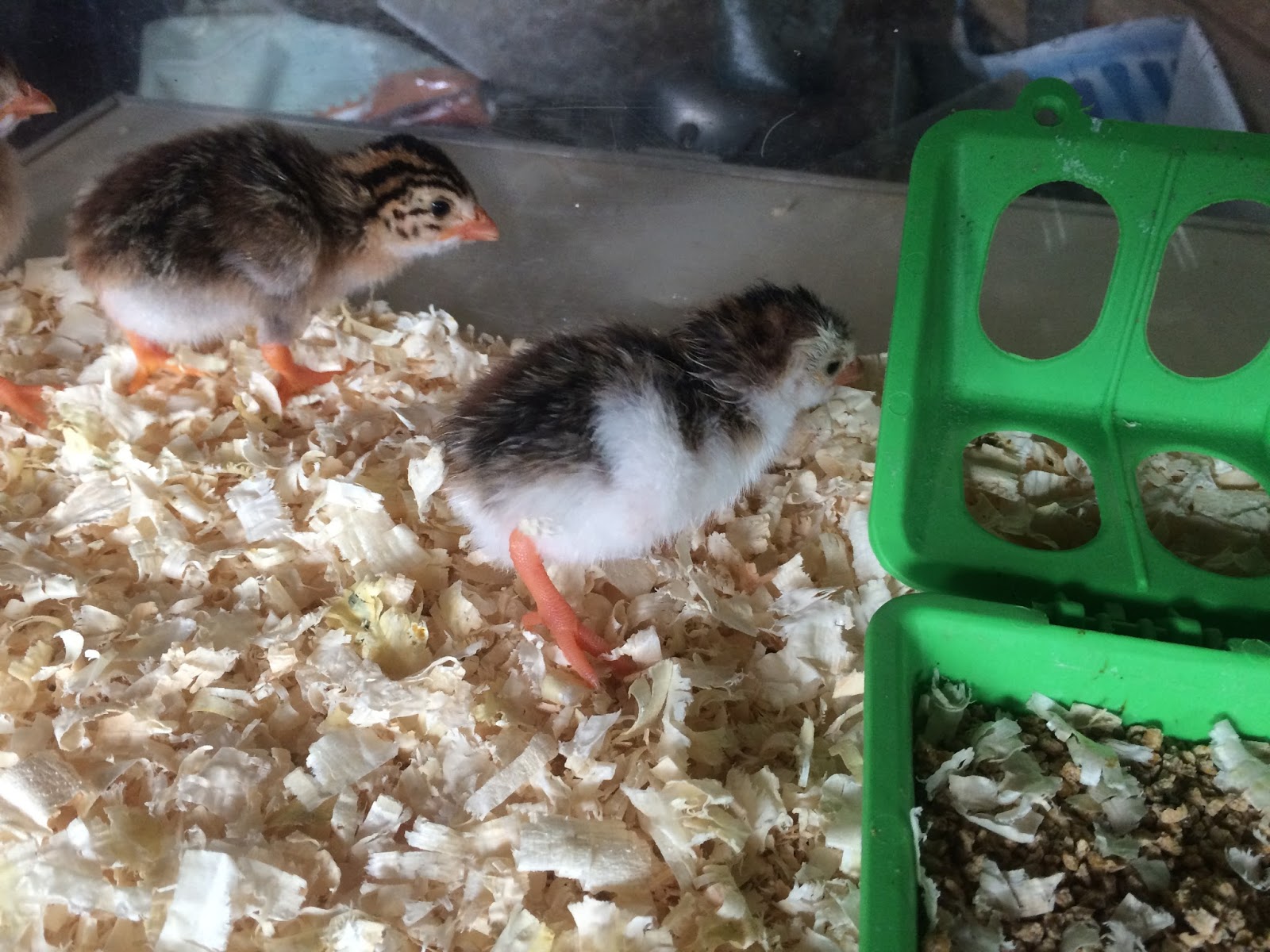
Our Keets, Now 10 Days Old, Though "Pipsqueek"in Front Is a Bit Less Than a Week Old

Sunday, July 17, 2016

Sustainable Poultry Odyssey

In the past we had ordered a variety of chicks, two dozen at a time, that arrived by post. Even though they matured into both roosters and hens, no mom ever became "broody" and incubated her eggs. Five years ago we again tried to develop a flock of sustainable poultry. At a tailgate sale we obtained two dozen white leghorn peeps, two Buff Orpington roosters and three matching hens. Although these fowl produced a phenomenal number of eggs the following years, none succeeded in producing offspring. One by one they succumbed to various maladies until we had only a single rooster. 

Spring, a year ago, we tried a different approach: a pair of young Guinea Fowl and a dozen "fertile" chicken eggs. The eggs never hatched and a year later we still had two vociferous fowl and the last of the earlier flock: a large Orpington rooster. Throughout an entire year we never found a Guinea fowl egg so our pair turned out to be both male. This spring we procured three Guinea hens to attract their attention. Within a few weeks we started finding eggs in the nesting boxes located in the chicken tractor. Eventually they decided laying eggs only in the upper left box. After it contained about 30 eggs, one of the Guinea hens began sitting on them. 
Our Buff Orpington Rooster and Two Male Guinea Fowl: Spot and
Dot
Closeup of Dot
The Dozen "Fertile" Eggs That Never Hatched: The Labels Help Orienting Them When Turning Then Every Day
The other two Guinea fowl, now blocked from laying eggs in the common nest by the broody fowl, found a secret place in some brush to lay their eggs. When clearing a patch of brush we came across the nest and collected the eggs because we didn't want the local fox to eat them or one of our fowl. We watched in horror a fox stalking our flock and successfully grabbing one by the tail. Guinea fowl are very strong fliers and it got away, leaving only a trail of many dozen feathers!
Part of the Trail of Feathers Left by the Fox
The First Hidden Guinea Fowl Nest
A week later we discovered a second nest with eggs and have been periodically snitching some of the eggs so that they never total more than ten. So far, they only visit the nest to lay eggs and show no tendency to brood. 
The Second Hidden Guinea Fowl Nest That We Rob Every Few Days
Our Egg Basket With Eggs From the Nest Above
The incubation period for chickens is around 21 days and we were disappointed that no keets (a baby Guinea fowl) appeared under the brooding Guinea fowl in 24 days, then 28, then 30. But on day 32 I saw a tiny keet on its mom's back. We couldn't imagine a keet surviving a five foot drop from her nesting box, nor would it be safe for them to live on the ground in the chicken tractor along with now eight full size birds. An internet search revealed that Guinea fowl moms are not especially good at taking care of their young and most recommended raising keets by hand
Our First Two Keets on the Pile of Eggs Their Mom Had been Sitting on For More Than 30 Days
Basket of Keets on Their Way to the Nursery
Picking Keets One-by-one so Each Can Have Its Bill Dipped Into the Water Trough to Insure It Knows Where to Get a Drink
Keets Huddled Under the Heat Lamp
Keets Basking in Early Morning Sun That They Like Better Than the Heat Lamp
We set up a nursery with game bird kibble, water and a heat lamp and secreted 13 keets away from their mom. She still had 30 eggs under her when she decided she had no future sitting on them and she left them ever longer periods. I fired up our incubator and transferred half the remaining eggs to it. The first night one hatched with four the next day. We now have 17 keets requiring attention at least  four times a day - for the next six weeks!
The Second Transfer of Keets from Under Their Mom Including the Only Grey Colored One
Incubator With Two Hatched Eggs
A Keet With Feathers Still Wet From Being Inside An Egg
The Last Keet to Hatch in the Incubator Has White Wings and Breast!
Rooster and One Fowl Inside the Chicken Tractor, One Outside

Our Red Hen and Spitzhaben Rooster With Two Guinea Fowl

Four Guinea Fowl Roaming a Field, Looking for Ticks and Other Things to Eat